
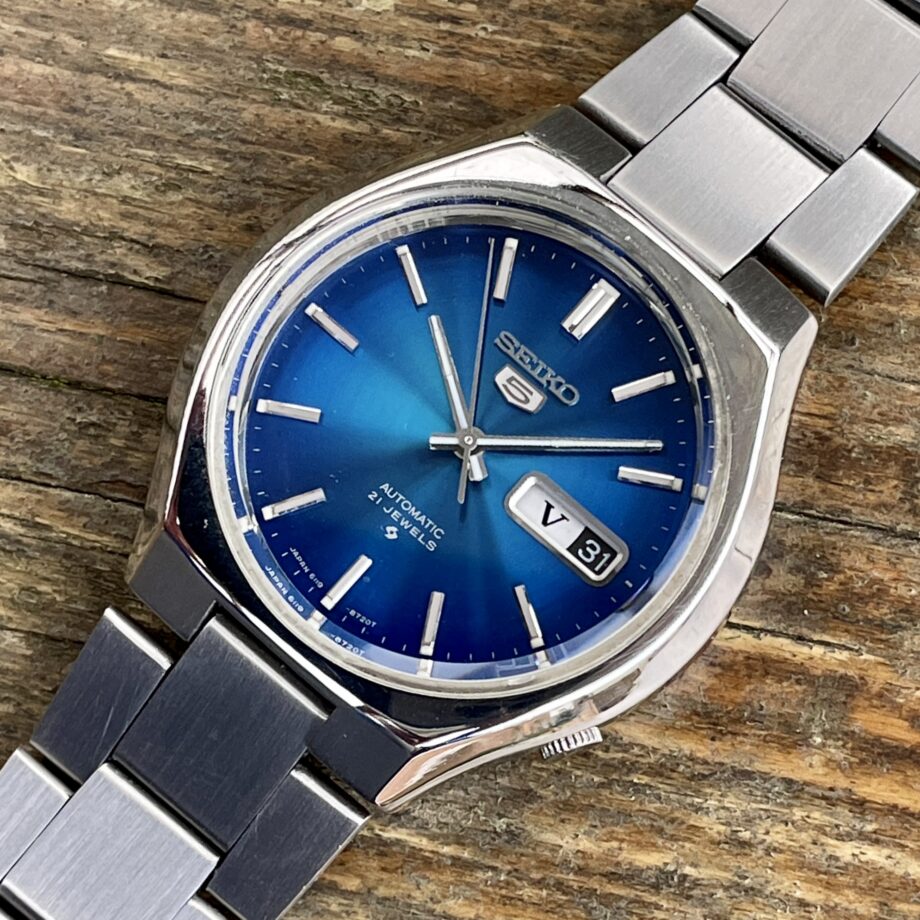
This watch is just stunning and for that reason it got a complete top to toe restoration. Really reminds me of a Tissot PRX case.
This watch came to me from a friend, Nick. Who on occasions sends me broken watches as payment for working on some of this watch finds . I have had this one since probably 2020 and it just languished in a “to do” draw until one day picking up and deciding it was time to give it some love.
I have no photos of the watch complete before I worked on it but here is the dial out of the case with the rather unusual purple crystal. That dial is just stunning, not only electric blue sunburst but also some radial marks to give it some texture. Seiko knew what they were doing in the 70s and with Seiko 5’s especially. This watch dates accurately to January of 1976.


The crystal is unusual, it feels coated with something so not a crystal you could attempt a polish on either. That said it is also Seiko hardlex which is practically impossible to polish anyway.
From what I can tell this is an early form of anti reflective coating which at the time I thought was fantastic and then set about finding a replacement. This was not easy but I did find one online but it was terribly expensive but then I found another for half the price, around £26, delivered from Spain.
Crystal arrived and I opened the packet to find it was just clear glass!
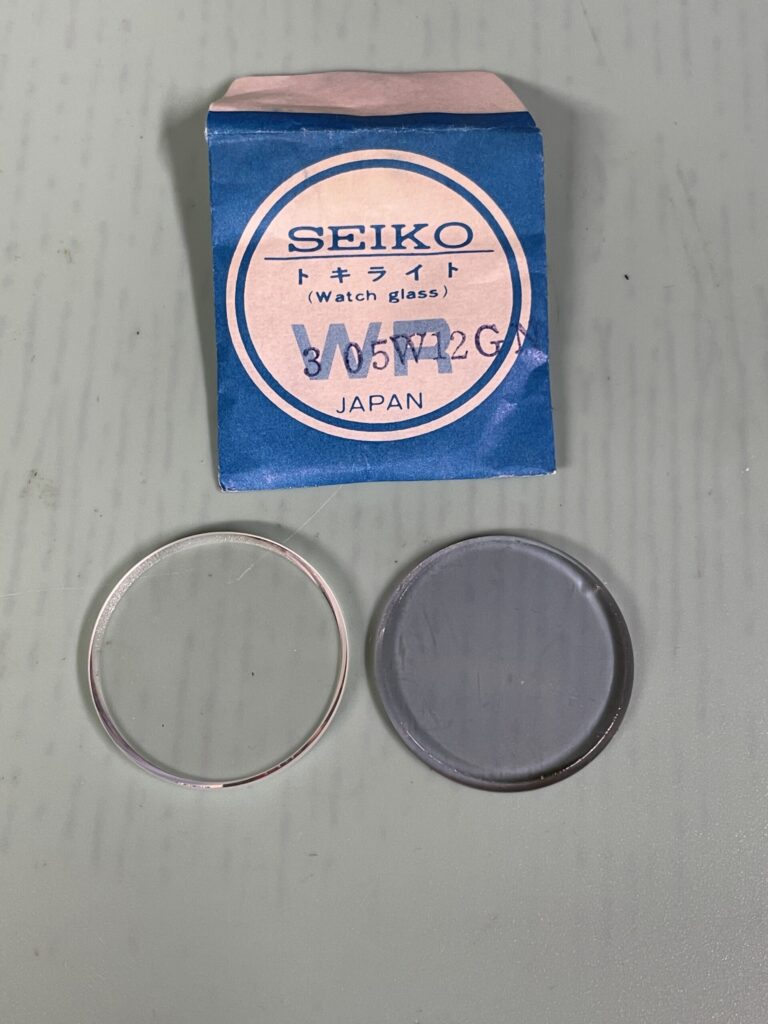
I was disappointed by this but then with some more digging realised I had made an error in the Seiko part number!! you can see on the packet in the photo it says 305SW12GN (305 actually is the size of the diameter! 30.5mm) I actually required 305SW12GM so just the N & M difference.
Typical when you are Googling and clicking on suggestions. Whilst disappointed the clear glass is still usable for the watch as it has a large bevelled edge just like the purple one.
Next was to strip down the movement. I am well versed with the 6119C, its also my favorite Seiko movement to work on.


I saw nothing out of place or broken. Seiko movements are so robust. This one being some 47 years old and hardly ever seen a watchmaker since its manufacture.

In this photo we see the pawl lever or “Magic” fingers which was Seiko’s own design that was eventually copied by some Swiss manufacturers years later. This is responsible for taking the motion of the rotor and transferring it to wind the mainspring. These Seiko 5’s were all automatic movements. You could not wind them by hand only through motion of your arm. The magic fingers grab and release the wheel teeth locking it on each turn. The pivot point in the centre of the part is off centre which gives a pulling and pushing motion that is simple yet ingenious at the same time. Having worked on quite a few Swiss watches of the same era those setups to transfer power are much more complex and more parts required. More parts mean more cost to manufacture and more importantly more parts that could fail and would need replacing making a movement less reliable long term. Its engineering ideas like this in Seiko movements that make them so robust and stand the test of time.
Now onto the case and bracelet. This had a full restoration just by hand using abrasive sticks and a number of polishing compounds at the end.
Here are the before shots.

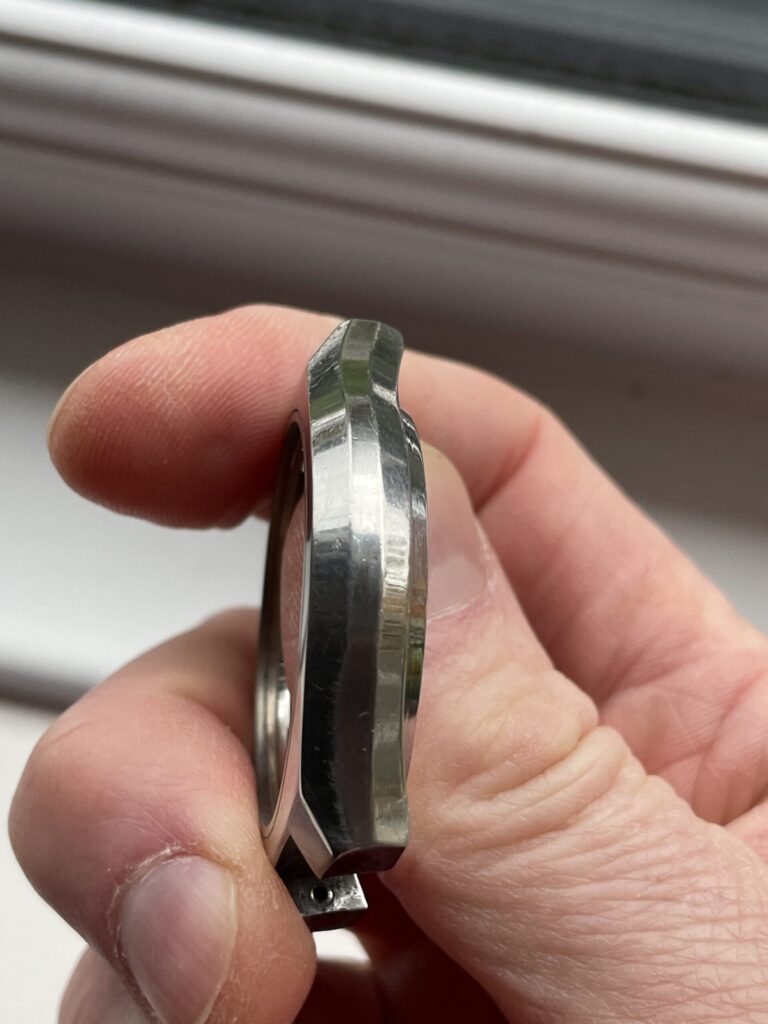

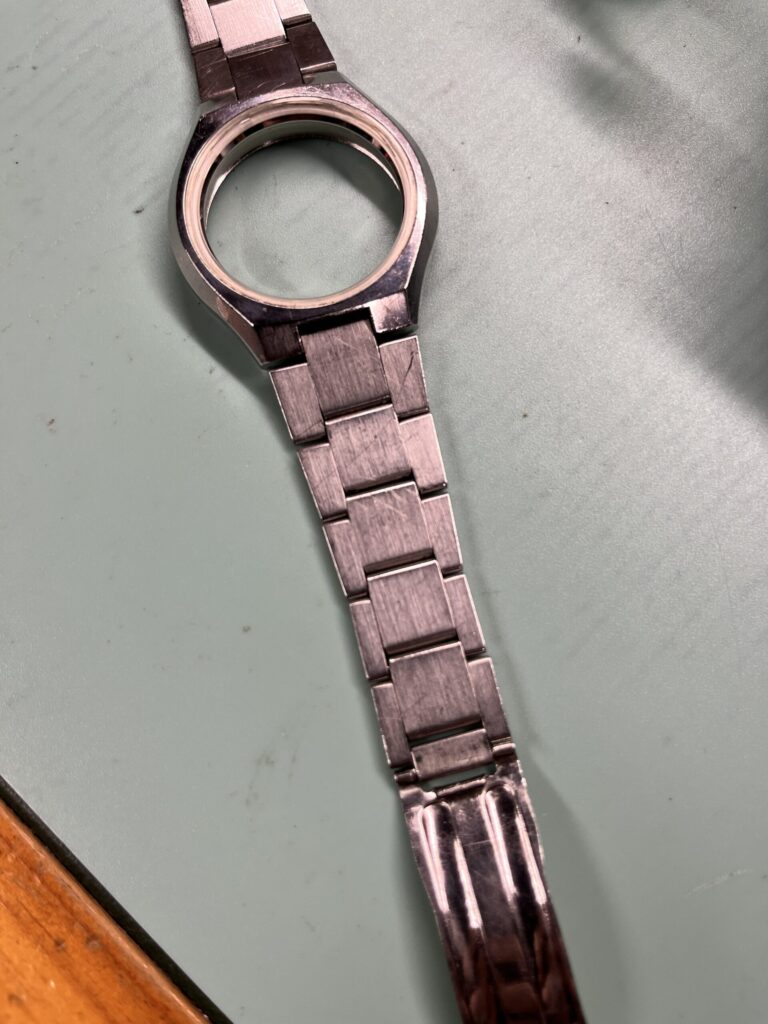
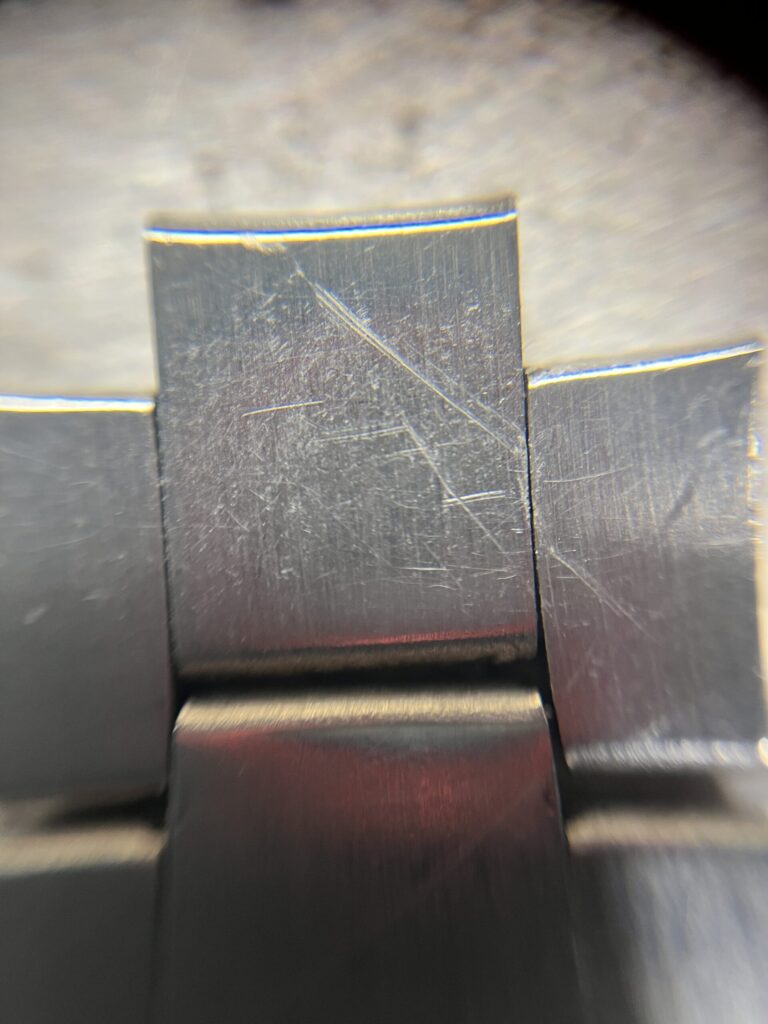
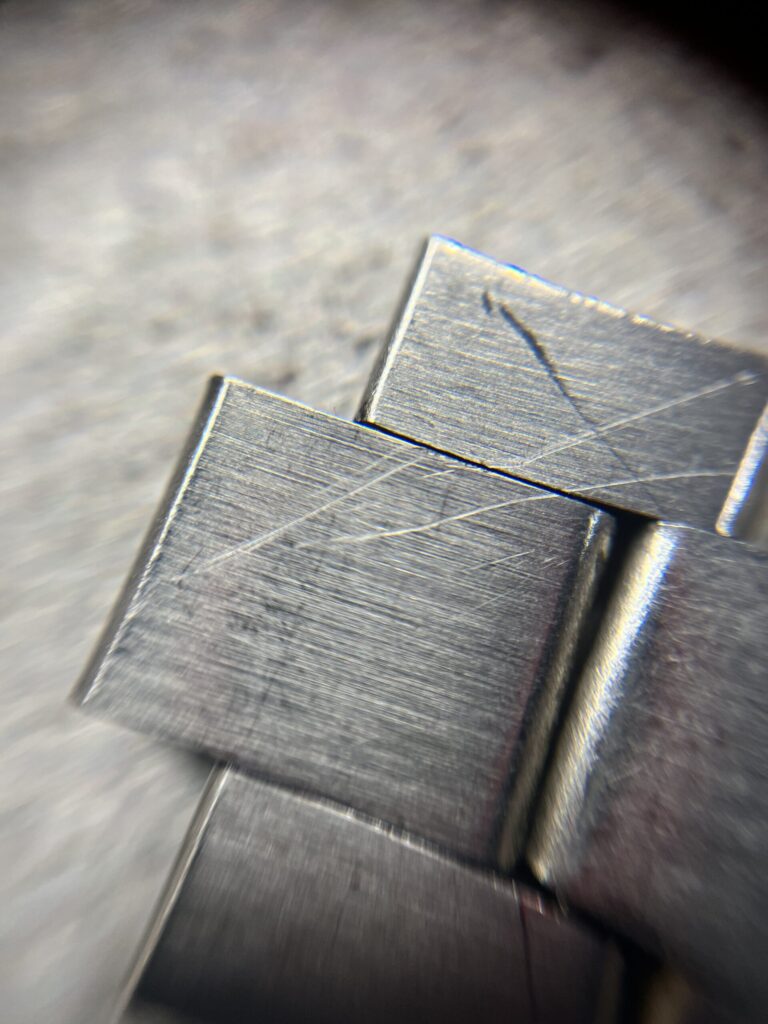


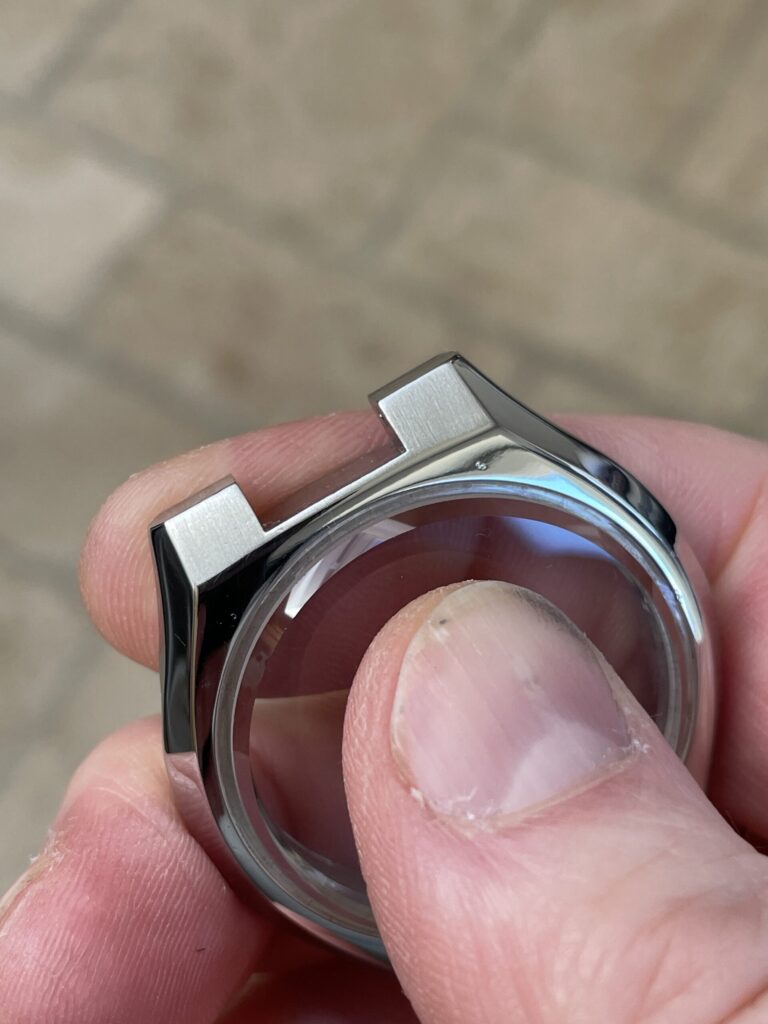
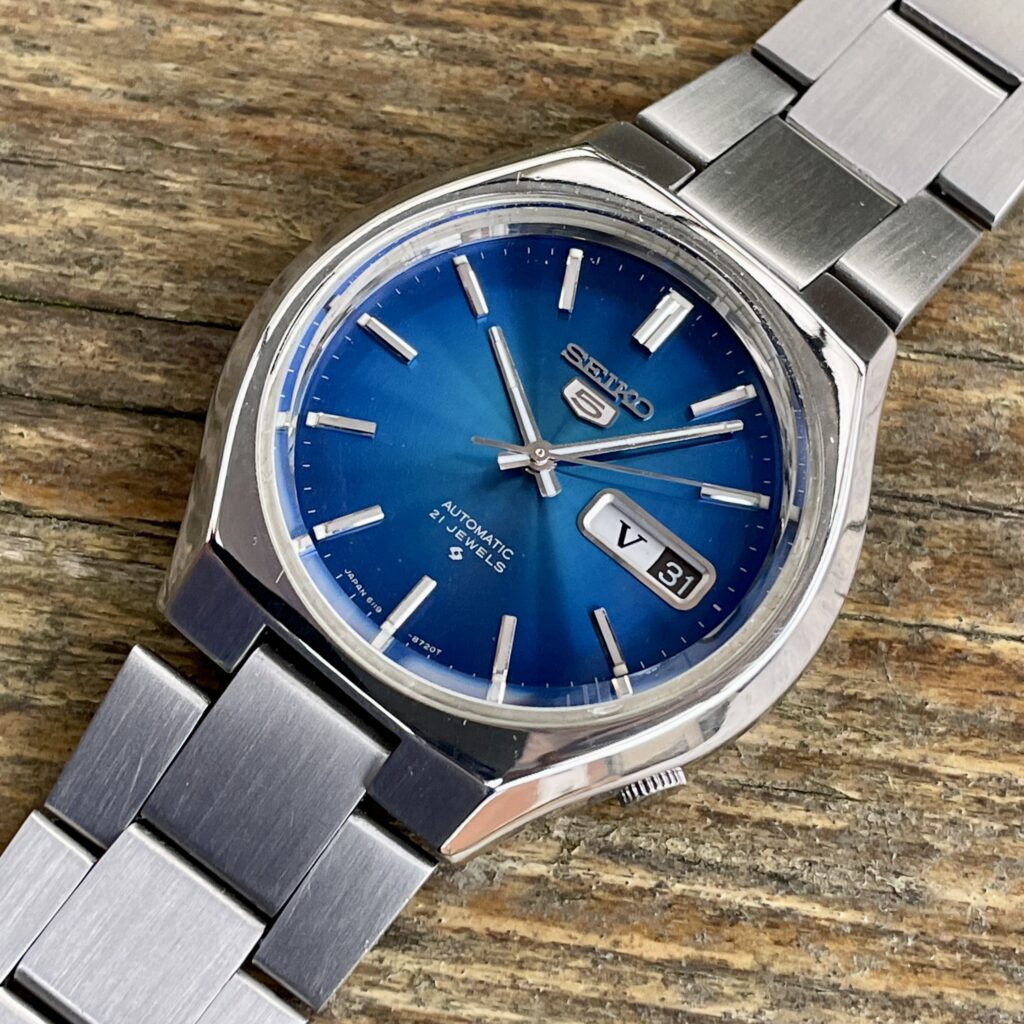
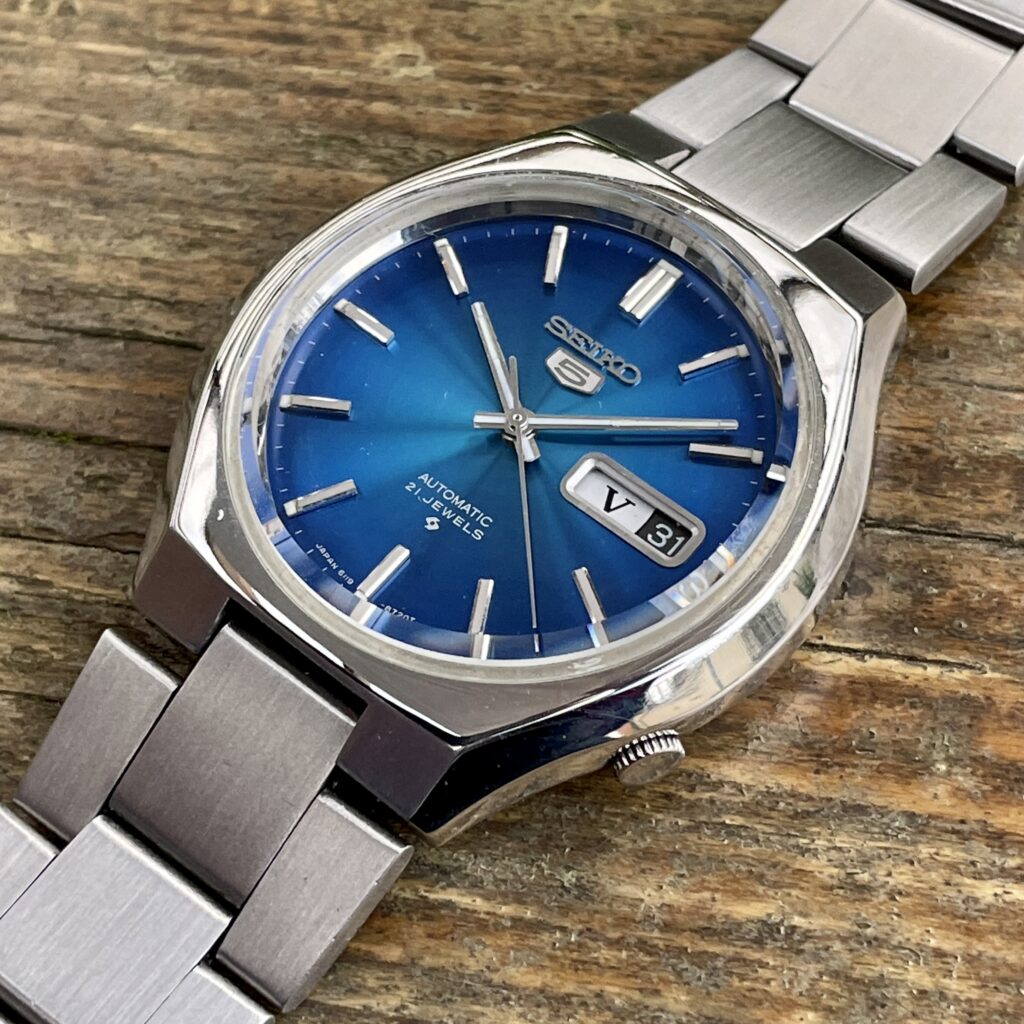
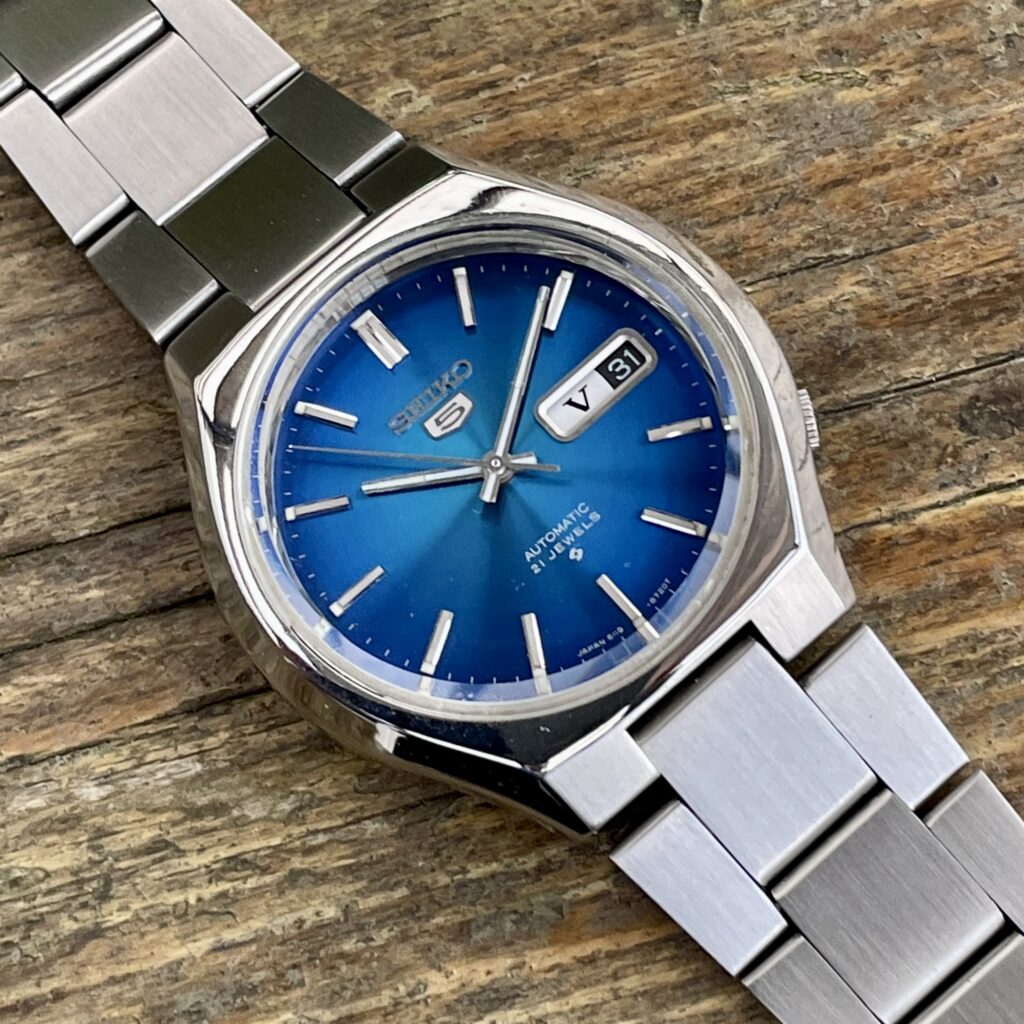
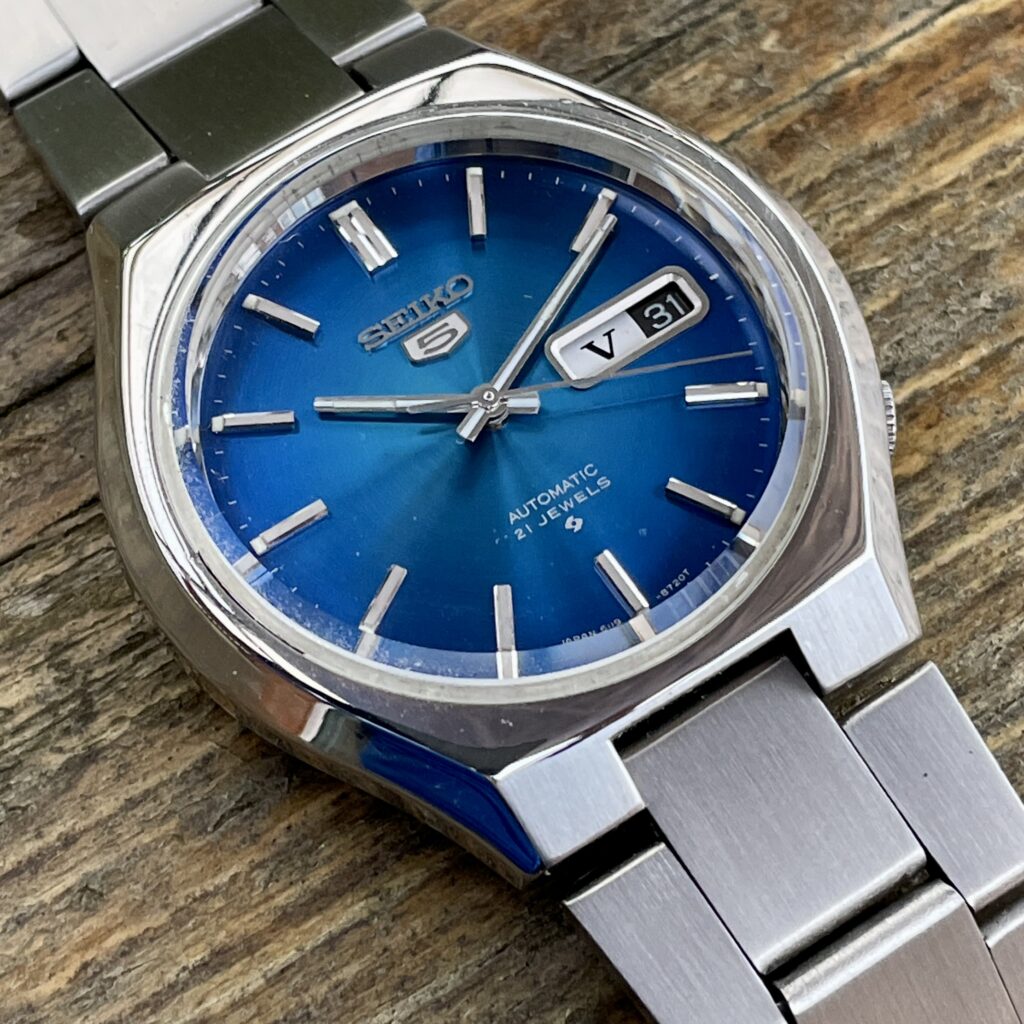
Here is how it all turned out. It took many days to get the finishes acceptable and in places I am still not happy but it is, I feel the best I can do on this watch with the tools I have.
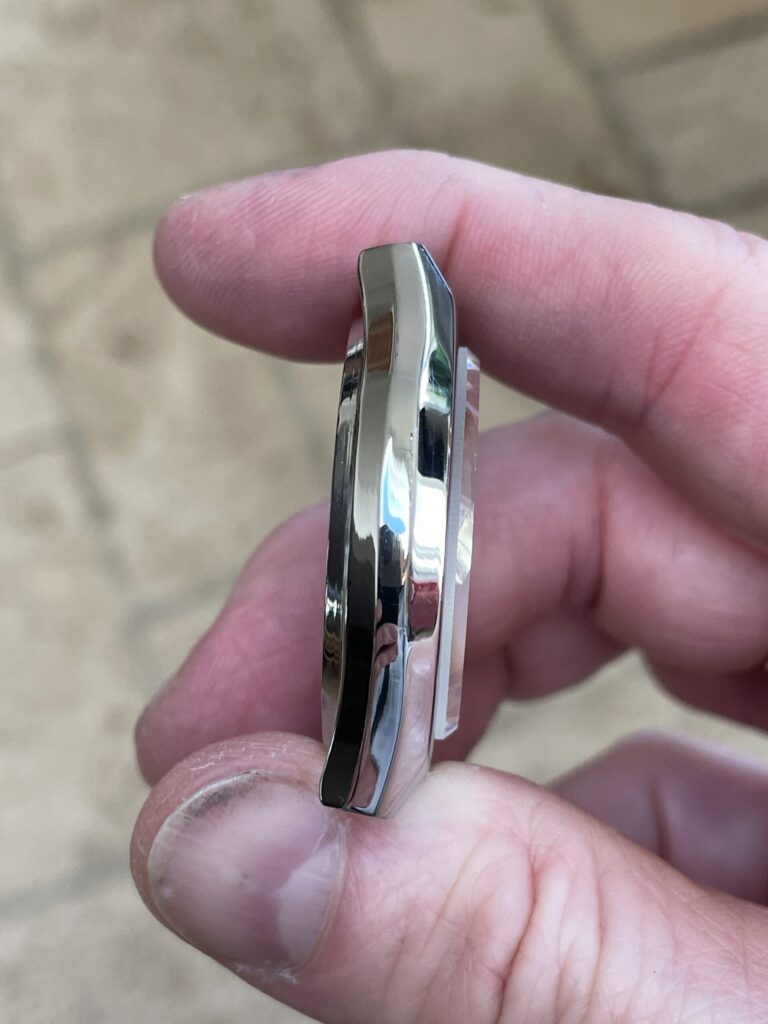
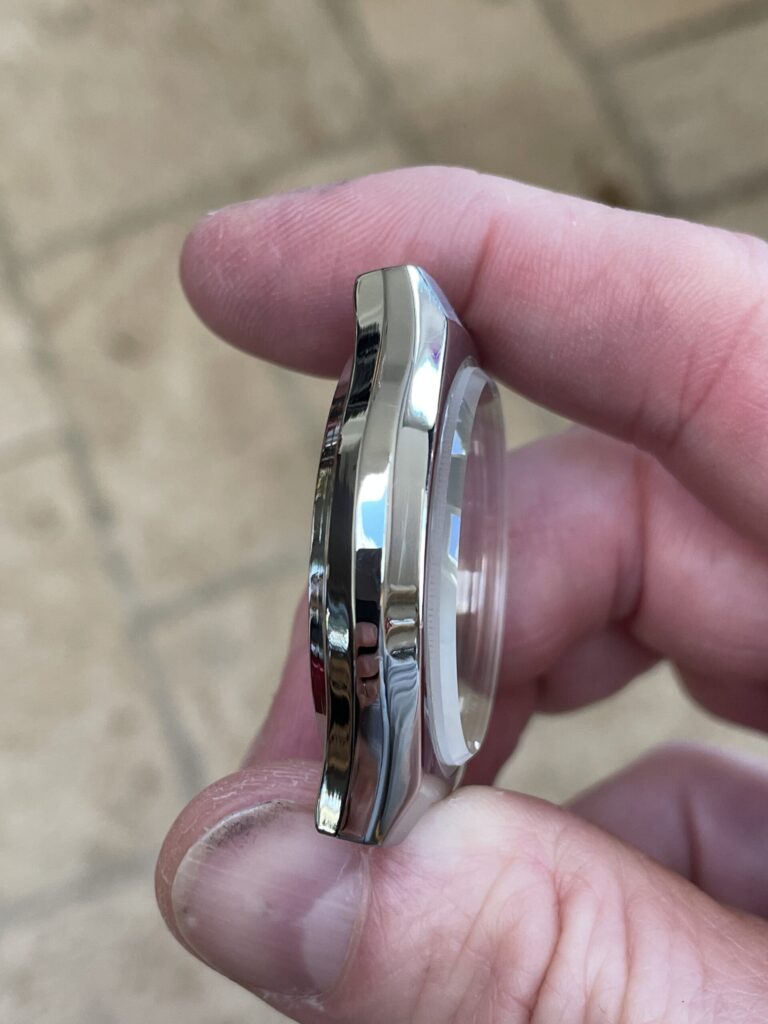

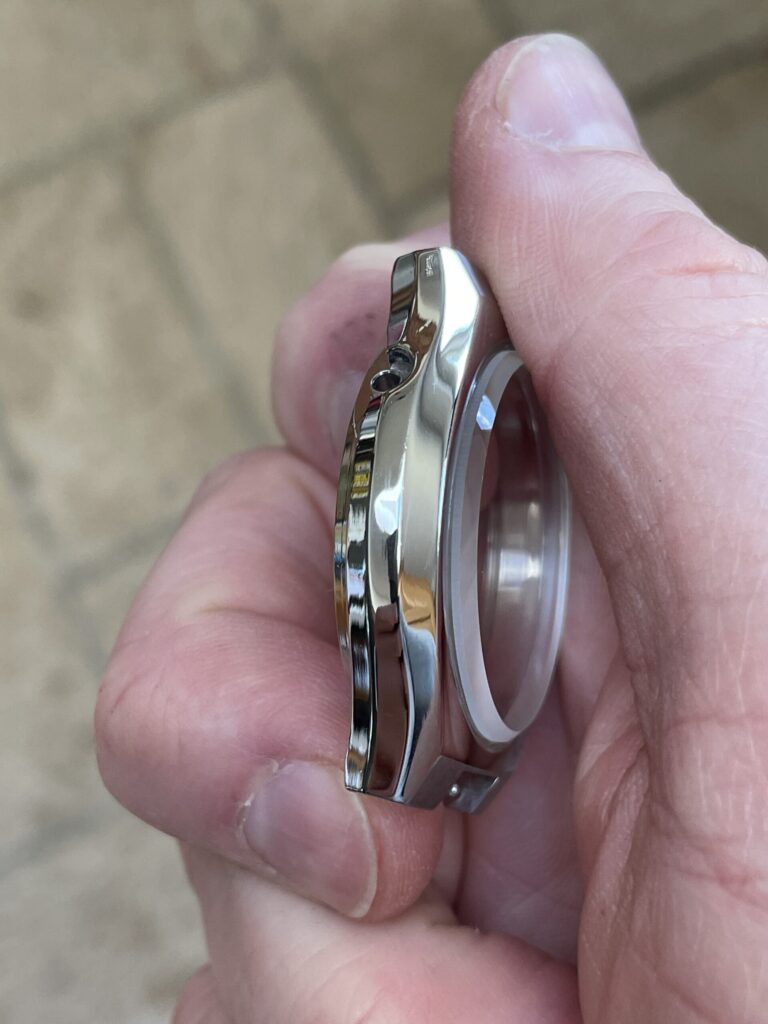

Hardest part was the lugs as they had a brushed finish but are not flat making applying brushing with Scotchbrite just a little more challenging.


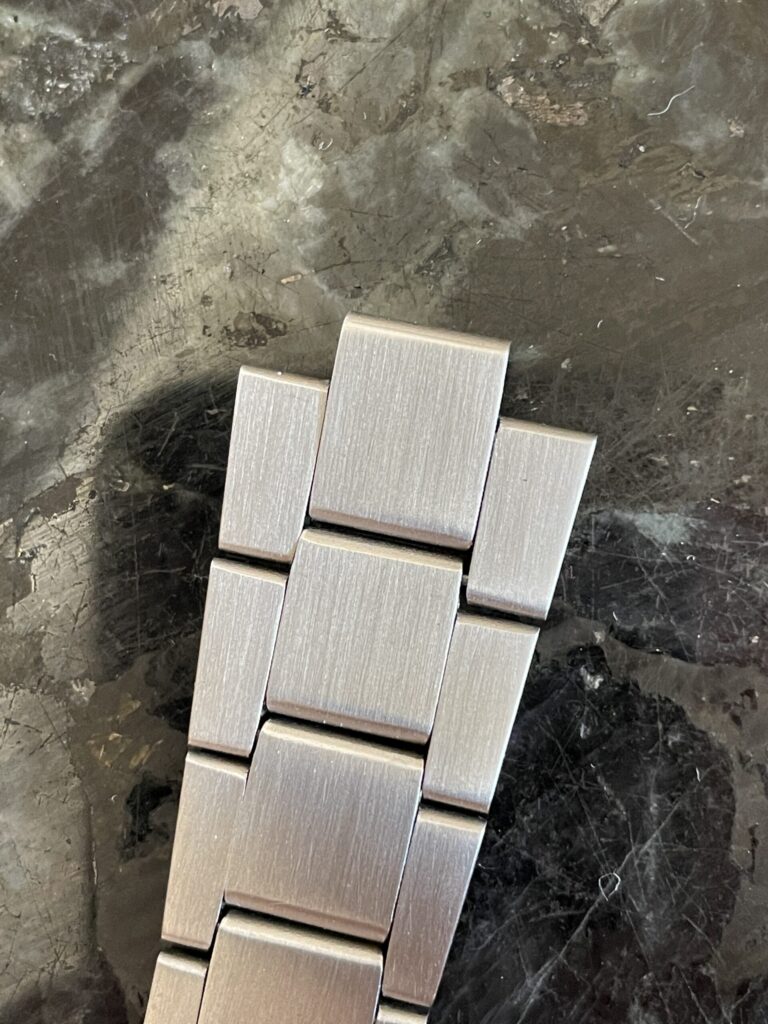
Then onto the bracelet. This required a coarse linear brushing using a very coarse hand pad.
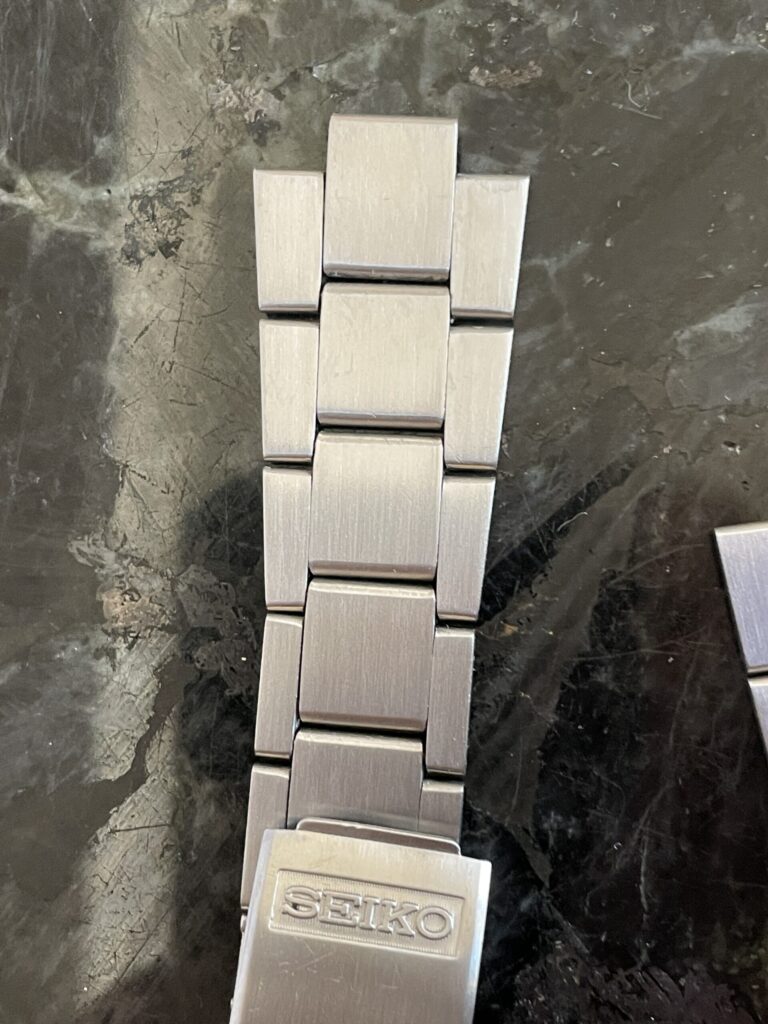

Here is the finished watch. The dial is everything on this one and I think with the clear glass installed it shows the beauty of that dial more favorably than the purple one would have. What do you think? leave a comment below.
Thanks for viewing this blog.



All Comments